
Dacia amissa and the Making of the New Lower Danubian Frontier

  • Dacia amissa et la création de la nouvelle frontière du Bas-Danube

DOI : 10.58335/hima.2390

p. 165-187

Résumés

This paper provides a critical overview of the two-step loss and abandonment of the province of Dacia after the middle of the 3rd century AD, as well as the making of the new Danubian frontier in the area of the subsequent late Roman province of Dacia Ripensis. The overview is based on literary, epigraphic, archaeological and numismatic sources, tackling the complex situation of the Lower Danubian provinces during the Third Century Crisis. The newly discovered fragments from Dexippus’ Scythica depicting terrible events in the Balkans under Gallienus, when he was sole emperor, as well as recent numismatic testimonies from Aurelian’s regnal years, about the situation north of the Danube, supplement the interpretation. The focus is on the loss of Dacia (amissio Daciae) and the strategic need for a new strengthened frontier on the Danube, capable of facing the challenges brought by the Bellum Scythicum. For that purpose the former Dacian legions were redeployed in the fortresses at Oescus and Ratiaria, with a number of other unspecified and redesigned smaller units in forts and fortlets lining the river, from its gorges to the mouth of the Olt tributary. Two strategic bridgeheads (Drobeta and Sucidava) were kept by Aurelian and reinforced by his successors, but several other minor fortifications are archaeologically known for the late 3rd to 4th centuries AD, on the left bank of the river, for the entire riparian frontier of Dacia Nova and, subsequently, Ripensis. With regard to the latter, the hypothesis defended here is that the making of both late Roman Dacian provinces (Ripensis and Mediterranea) occurred between AD 321 and 343/344, most likely as the result of a greater Constantinian decision, following the defeat of Licinius in AD 324.

Cet article propose un survol critique de la perte et de l’abandon en deux étapes de la province de Dacie après le milieu du iiie siècle après J.-C., de même que la création de la nouvelle frontière danubienne dans la zone de la future province romaine tardive de Dacia Ripensis. Le survol s’appuie sur les sources littéraires, épigraphiques, archéologiques et numismatiques, qui traitent de la situation complexe des provinces du Bas-Danube pendant la Crise du iiie siècle. Les fragments récemment découverts des Scythica de Dexippe, illustrant les terribles événements survenus dans les Balkans sous Gallien, lorsqu’il était seul empereur, ainsi que les témoignages numismatiques récents datant du règne d'Aurélien, concernant la situation au nord du Danube, ont également été rassemblés. L’accent est mis sur la perte de la Dacie (amissio Daciae) et sur la nécessité stratégique d’une nouvelle frontière renforcée sur le Danube, capable de faire face aux défis posés par le Bellum Scythicum. À cette fin, les anciennes légions daces ont été redéployées dans les forteresses d’Oescus et de Ratiaria, avec un certain nombre d'autres unités plus petites, non spécifiées et réorganisées, dans des forts et des fortins bordés le long du fleuve, depuis ses gorges jusqu'à l'embouchure de son affluent Olt. Deux têtes de pont stratégiques (Drobeta et Sucidava) furent conservées par Aurélien et renforcées par ses successeurs, mais plusieurs autres fortifications mineures sont archéologiquement connues pour la fin du iiie et au ive siècles après J.-C., sur la rive gauche du fleuve, sur toute la frontière riveraine de Dacia Nova et, ensuite, la Ripensis. En ce qui concerne cette dernière, l’hypothèse ici défendue est que la création des deux provinces daces tardives (Ripensis et Mediterranea) s'est produite entre 321 et 343/344 après J.-C., très probablement à la suite d'une décision constantinienne plus importante, à la suite de la défaite de Licinius en 324 après J.-C.

Plan

Texte

Introduction

The abandonment of the province of Dacia was in fact the cumulative result of multiple developments during the 3rd century AD. There is no single cause, but a critical analysis of the written sources combined with coin-finds and epigraphic analysis highlights numerous factors. The half-century of crisis,1 beginning in AD 235, was a period of combined pressures due to barbarian invasions, civil wars and rebellions, political instability and usurpers competing for power, as well as plague,2 and debasement of currency with accompanying economic depression; this is often called the period of the Soldatenkaiser (“Barrack Emperors”).3 The Lower Danubian provinces of the Roman Empire (Fig. 1) were directly affected by the ravaging “Scythian War” (238-269) and they were therefore in the focus of the ruling emperors and sometimes of the usurpers. That 30-year-long Bellum Scythicum with the Goths and their allies started under Maximinus Thrax and lasted until the famous victory of Claudius II Gothicus at Naissus in 269. Almost at the end of this period, Dacia north of the Danube was lost and thereafter the frontier of the Empire stood once again on the Danube. A new province named Dacia was created south of the Danube between the two Moesiae, later divided in two: Dacia Ripensis and Dacia Mediterranea (Fig. 2).

Figure 1: The Danubian provinces of the Roman Empire (2nd-3rd centuries).
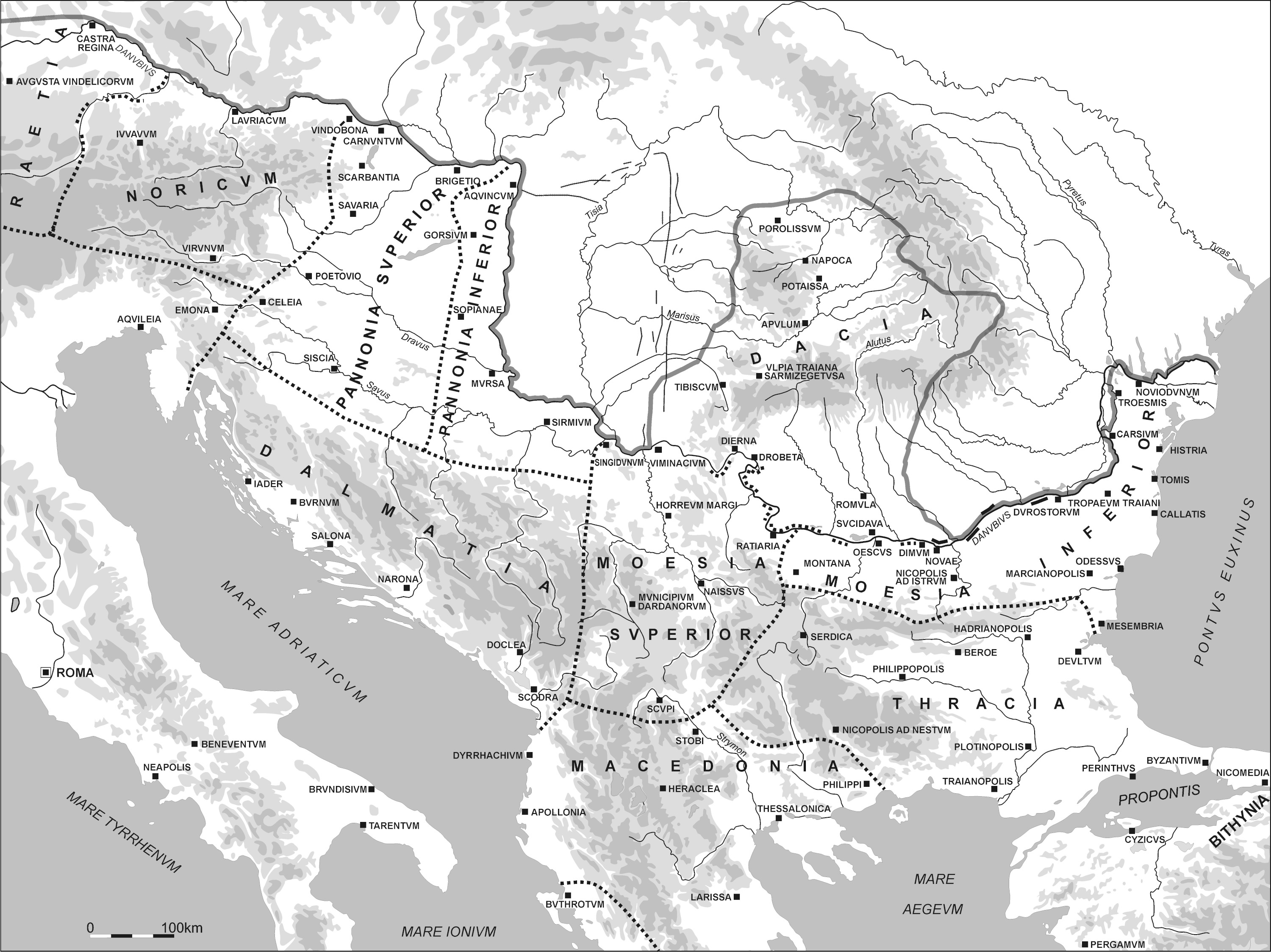
Figure 1: The Danubian provinces of the Roman Empire (2nd-3rd centuries).

Credits/sources: Map by Iuliana Barnea.

Figure 2: The Danubian provinces of the Roman Empire (4th century).
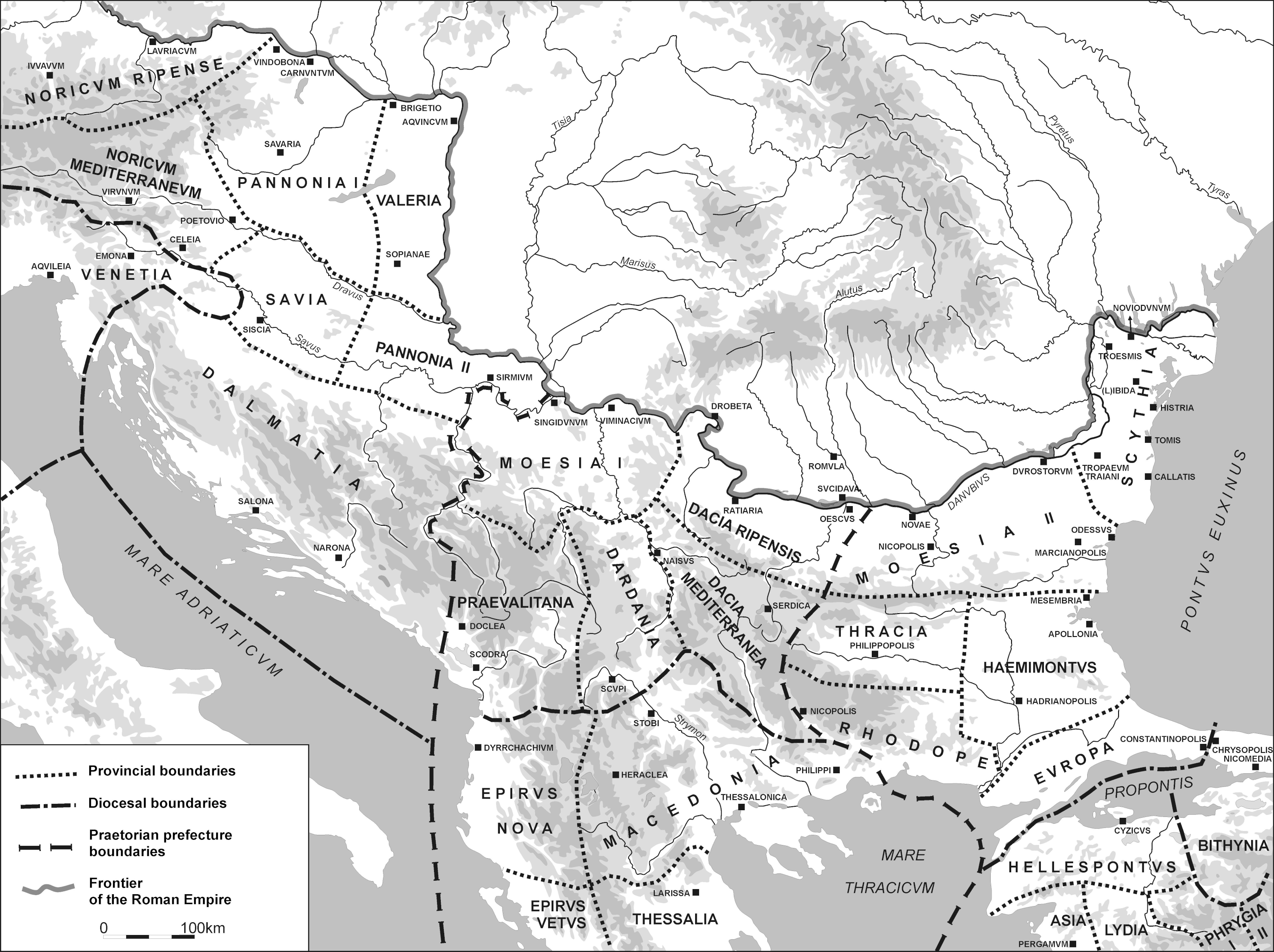
Figure 2: The Danubian provinces of the Roman Empire (4th century).

Credits/sources: Map by Iuliana Barnea.

The Roman literary tradition

The ancient literary sources involved at our disposal concerning this issue are at the earliest a century later than the events themselves. As it was already observed, two different interpretation are competing on this issue: one is that represented mainly by Sextus Aurelius Victor,4 who placed the events during the reign of Gallienus:

Since his suppression of these was fortunate and beyond what he had prayed for, like men who are lucky he became excessively careless and together with his son, Saloninus, on whom he had conferred the rank of Caesar, he shipwrecked the Roman state, so to speak, to such a degree that the Goths freely penetrated Thrace and occupied Macedonia, Achaea and the border regions of Asia, the Parthians seized Mesopotamia and bandits, or more accurately a woman, controlled the east. At that time, too, a force of Alamanni took possession of Italy while tribes of Franks pillaged Gaul and occupied Spain, where they ravaged and almost destroyed the town of Tarraconensis, and some, after conveniently acquiring ships, penetrated as far as Africa. Even the territories across the Danube, which Trajan had secured, were lost. (Aurelius Victor, Book of the Caesars, XXXIII, 3 = EKG, fr. 83d).5

The second interpretations is illustrated primarily by the magister memoriae Eutropius,6 attributing events to Aurelian, but keeping the tradition that Dacia was in fact lost during Gallienus:

The Alamanni devastated the Gauls and penetrated Italy. Dacia, which had been added beyond the Danube by Trajan, was lost at that time. Greece, Macedonia, Pontus and Asia were devastated by the Goths. Pannonia was ravaged by the Sarmatians and Quadi, the Germans penetrated the Spanish provinces and stormed the renowned city of Tarragona, and the Parthians occupied Mesopotamia and had begun to claim Syria for themselves. (Eutropius, Breviarium of Roman History, IX, 8, 2 = EKG, fr. 83a).7

He gave up the province of Dacia, which Trajan had created beyond the Danube, since the whole of Illyricum and Moesia had been devastated and he despaired of being able to retain it, and he withdrew the Romans from the cities and countryside of Dacia and resettled them in the middle of Moesia and named it Dacia, which now divides the two Moesias and is on the right bank of the Danube as it flows to the sea, whereas previously it was on the left. (Eutropius, Breviarium of Roman History, IX, 15, 1 = EKG, fr. 93a).8

On seeing that Illyricum was devastated and Moesia was in a ruinous state, he abandoned the province of Trans-Danubian Dacia, which had been formed by Trajan, and led away both soldiers and provincials, giving up hope that it could be retained. The people whom he moved out from it he established in Moesia, and gave to this district, which now divides the two provinces of Moesia, the name of Dacia. (Historia Augusta, Divus Aurelianus, XXXIX, 7 = EKG, fr. 93f).9

In fact, it looks like both 4th-century authors are dependent on the same tradition: the Enmannsche Kaisergeschichte (“Enmann’s History of the Emperors”), previously and thereafter abbreviated EKG.10 The latter is an enigmatic yet trustworthy and good quality lost work of late Constantinian dating, which inspired not only Aurelius Victor and Eutropius, but also the authors of Historia Augusta11 and of Epitome de Caesaribus.12 Both epitomizers, Aurelius Victor and especially Flavius Eutropius—who was in fact the most loyal to EKG—used it as a base source, while the Historia Augusta just as a secondary one. For this good reason, Rufius Festus, who summarised Eutropius in a concentrated form,13 and later on Orosius are following this line of information,14 whereas the EKG tradition re-emerged once more in the Roman History (Romana) of Jordanes in the mid-6th century AD,15 relying on Rufius Festus.16 This tradition, followed especially by Aurelius Victor, offered a very negative image of Gallienus.17 Nevertheless, the EKG tradition, as it is preserved both by Aurelius Victor and Eutropius, distinguished between the very first part of the reign, rather positive, and the second one, negative.18 The loss of Dacia belongs to the second, negative, phase of the reign. Without being able to answer the question why Aurelius Victor does not mention the ceding of Dacia by Aurelian and the making of the southern province of Dacia, we can only agree with the opinion that both moments were present in the biography of Aurelian in EKG.19 Perhaps, Aurelius Victor did not want to spoil the perfect image of Aurelian, as an emperor who officially gave up a Roman province, since all other details taken from EKG are present in the text, while only the loss of trans-Danubian Dacia and the making of the new southern province of Dacia are missing.

In short, after the critical analysis of all available unequal sources, one can discern two major events. One during the reign of Gallienus and the other in Aurelian’s time: a loss (amissio) as the sources name it, followed, a few years later, by an organised withdrawal. This is what we learn from the short, heavily abbreviated form given by Rufius Festus, which proves that both moments were present in the imperial biographies of Gallienus and Aurelian.20 Both must have been not only dramatic, but are part of the same series of events. On the other hand, the problems in Dacia are largely comparable to the dramatic loss of agri Decumati, when “sub Gallieno principe … Raetia amissa”.21 These territories of Germania Superior and Raetia were lost under the heavy attacks in 259-260,22 when sub Gallieno imperatore a barbaris occupatae sunt.23 The unhappy events came together with the so-called Gallic Empire of the Batavian usurper Postumus (260-269). Just a few years earlier, a dedication in Hausen ob Lontal (Baden-Württemberg) was the last inscription known north of the Danube. It was offered to the emperors in the beginning of the joint government of Valerian and Gallienus (by the end of 254-early 255), given the imperial title of Germanicus of the latter (CIL, III, 5933). Dacia was the first province lost by the Roman Empire since Hadrian, and we simply have no clues as to how the things developed. However, a new province of Dacia south of Danube is similar to the new province of Germania west of the Rhine after the disaster of AD 9. The former province Germania, which had lasted for two decades, was deserted and practically a new province was built on the Gallic soil, as Tacitus stated (Annales, 1, 31). The same happened approximately 250 years later in the Lower Danube, where administratively speaking, Dacia was simply moved to the south. This was once again a large-scale stroke of the official propaganda, with the abandonment of Dacia presented not as a loss, but as a restoration, and materialised as Dacia nova. The moving of a large part of the population into an area devastated for about two decades by war and invasions,24 which definitely had an important impact on the demography, could also have been seen as a first step of a regained peace.

Initially, almost the entire historiography took into consideration the year AD 267,25 following the Historia Augusta tradition:26

Meanwhile the Scythians sailed across the Black Sea and, entering the Danube, did much damage on Roman soil. Learning of this, Gallienus deputed Cleodamus and Athenaeus the Byzantines to repair and fortify the cities, and a battle was fought near the Black Sea, in which the barbarians were conquered by the Byzantine leaders. The Goths were also defeated in a naval battle by the general Venerianus, though Venerianus himself died a soldier’s death. Then the Goths ravaged Cyzicus and Asia and then all of Achaea, but were vanquished by the Athenians under the command of Dexippus, an historian of these times. Driven thence, they roved through Epirus, Macedonia and Moesia. (The Two Gallieni, XIII, 6-8)

However, taking into account the newly discovered fragments from Dexippus’ Scythica (Codex Vindobonensis Hist. Gr. 73, ff. 192-195),27 I. Piso argued in favour of AD 262 (if not broader, 261/263).28

Epigraphic sources

In Dacia the last official inscriptions in those times of turmoil belonged, as expected, to the military. Two dedications to Aesculapius and Hygia,29 respectively to Fortuna,30 protectress of the baths (Balnearis) were excavated in the legionary thermae at Potaissa during season 2000. Both were close to their initial position, fallen in the south-western corner of Vestibule E of this ensemble. The altars honoured the god of healing and the goddess of health, besides the deliberately erased name of the emperor (damnatio memoriae), who could have been Imp(erator) Gallienus Aug(ustus), although the names of two usurpers have also been suggested: Aemilius Aemilianus (by Ioan Piso)31, Regalianus or even Ingenuus (by Constantin C. Petolescu).32 The dedicator of the above was of Thracian origin, Marcus Publicianus Rhesus, praefectus of the ala I Batavorum milliaria and agens vice praefecti legionis, most likely after 258. The hypothesis that he also took with him the large mounted unit from Războieni-Cetate to Potaissa is plausible, since it fits right in Gallienus’ reforms of strengthening the role of the cavalry units. Together with the legionary cavalry, they were grouped in strategic reserves deployed in or around important centres. This master plan was intended for decisive interventions in vulnerable points of the frontiers. Moreover, inside the legionary fortress from Potaissa there was plenty of space for both units. The poor quality of the stone is consistent with the uncertain identity of the emperor (or usurper) honoured at Potaissa. One should note that the officer’s name at Potaissa—unlike Marcus Simplicinius Genialis, the Raetian governor under usurper Postumus from the famous Augsburg Victory Altar, dated 11th September 260—was left unharmed.33 That means he was not held guilty of any disloyalty. Both the dedication and the damnatio memoriae must have happened during the last decade of Gallienus’ reign, or even later, in any case subsequent to the tactical reforms mentioned above.

A few years earlier, a Donatus is attested once more as praefectus of the same legion V Macedonica (255/256?).34 The inscription reveals military building activities, i.e. a new temple offered to Deus Azizus. Azizus was a celestial divinity from the Syrian Edessa, and it was also known as Bonus Puer in Dacia. Thus, Deus Azizus Bonus Puer Conservator is honoured by the above-mentioned commander. This could be an indirect proof that life in the province did not change very much around 250-260 and nobody foresaw the forthcoming disaster of 262. The previously mentioned double deity formula, Aesculapius & Hygia (Dii magni et boni), is invoked a few years later by M. Aurelius Veteranus, this time praefectus legionis XIII Geminae Gallienianae, who was setting an altar far from the garrison in Apulum, on the occasion of his visit to the famous spa settlement from Băile Herculane.35 He was there, most likely ca 260-261/262, enjoying the still functioning spa and asking for divine help to unknown health problems.

At Sarmizegetusa, before AD 257/258, Valerianus iunior is honoured through a statue.36 The same is true of Cornelia Salonina at Tibiscum.37

In the nearby Mehadia, at Praetorium, the cohors III Delmatarum Valeriana Gallieniana milliaria equitata civium Romanorum pia fidelis was honouring at some time earlier the imperial divine power (numen) and the two emperors, father and son, Valerian and Gallienus, between 257 and the moment when the former was taken captive by the Persian emperor Shapur I in spring 260.38 Many of the above mentioned inscriptions are clearly highlighting the changes initiated by Gallienus, who brought equestrians as agentes vice praesidis, in place of the formerly exclusive senatorial holders.

All these epigraphic sources indicate investment in new buildings and provincial officials that suggest a relatively peaceful province before the disaster of AD 262 or later. Although the south of the Danube was under constant threat, nothing similar seems to have happened before AD 262 in Dacia, at least from the time of Philip the Arab’s Carpic war and Decius’ victories, which gave the latter the title of restitutor Daciarum.39 Therefore, the amissio Daciae was a dramatic and unexpected event. The fact that much of the Dacian army had been sent to other parts of the Empire was probably one of the reasons for the rapid and total collapse of Roman control over Dacia.40 Gallienus was not able to respond and Dacia was lost. One can imagine that losing control over a province for almost ten years would have made a comeback practically impossible, since the cities and the military installations suffered decay, being used only as retreat fortifications.41 Aurelianus had no choice but to build a new Dacia on Roman soil south of the Danube and to transfer to the new province as many of the people from trans-Danubian Dacia as possible. The enlargement of the precincts of so-called Oescus II and Novae II could be connected with the need to settle newcomers. This aspect has been practically ignored, but one should expect that a significant number of military and administrative staff and provinciales fled from the north of the Danube and settled in the new Dacia and in the neighbouring provinces of Moesia Superior and Moesia Inferior, later renamed Moesia I and Moesia II, respectively. A certain Aurelius Victorinus, born in or coming from Serdica, was offered an epitaph by his brother in Rome, during the last decades of the 3rd century. Both were praetorians in the 6th cohort, when Aurelius Victorinus died in harness, at the age of 30. According to the text, the deceased was natione Dacisca and one has plausibly inferred he and his family were refugees moved from Dacia north of the Danube by Aurelian.42 V. Velkov also remarked an unprecedented increase of the number of Latin inscriptions in Serdica during the second half of the 3rd century AD, a phenomenon that lasted to the 6th century, and linked its beginning to the strategic decision of Aurelian.43

Numismatic sources

Last but not least, the numismatic perspective44 reveals a drastic reduction of the monetary circulation during the reigns of Valerian and Gallienus (253-268), reaching a dramatic minimum in 260-268 in the most representative cities of the province (Apulum and Potaissa, Ulpia Traiana Sarmizegetusa and Porolissum). Apulum and Potaissa, the two main cities and major military garrisons, nevertheless, have fairly average (or slightly better than average) coin assemblages, but not in any substantial numbers.45 The coin-finds are clustered along the imperial road to the northernmost centre of Porolissum and to eastern Transylvania in the upper basin of Mureș with Târnava rivers.46 The same pattern is observed for the years 268-270. Coins attributed to the reigns of Claudius II and Aurelian were not present at the auxiliary forts, and the same goes for Ulpia Traiana Sarmizegetusa.47 By the end of the reign of Gallienus, Dacia as a whole was practically out of the Empire’s control.48 As for the legionary centres of Apulum and Potaissa, their particular situation is quite curious: the monetary circulation at Apulum collapsed in this final stage, while Potaissa continued under Aurelian.49 Except for an uncertain stray find from the legionary fortress, the few coins from Aurelian and Severina found there belonged to modern collections. No information regarding their topographic or stratigraphic provenance, either military or coming from the civilian settlement, is known for any of them.50 From Apulum, on the other hand, a hoard is known (Apulum III) ending with two antoniniani of Aurelian. It is worth mentioning that the hoard was found in 1905 in one of the rooms (XXXIII) of the private baths in the praetorium consularis.51 Despite this, one should stress a general low level of economic life, but also the weak position of coins within the commercial relationships. Little can be said regarding the coin supply for the pay of the soldiers from the two Dacian legions. Zooming out is, nevertheless, highly appropriate. The monetary production of the central mints during the 260s-270s is well known for its huge quantities of coins, with obvious reinforcement and stabilisation in nearby Pannonia, and a documented abundance in both provinces of Moesia.52 Finally, one should remark that the closing issues of the DACIA FELIX coin series are highly suggestive, as well. The last emperors associated with such coin-finds are Trajan Decius in 251, followed by Claudius II and Aurelian. The latter’s Dacia Felix coins were minted in Mediolanum in December 270-January 271 (Fig. 3) and this was à juste titre interpreted as a terminus post quem for the withdrawal.53 Those gold coins and antoniniani issued in Mediolanum were probably mainly meant for a donativum given to the troops engaged in the large-scale withdrawal operation.54 Subsequently, the mint in Serdica was swiftly reopened during the summer of 271, in the capital of Dacia nova.55

Figure 3: Aureus struck by Aurelian (Milan mint, end 270). Reverse with the legend DACIA FELIX.
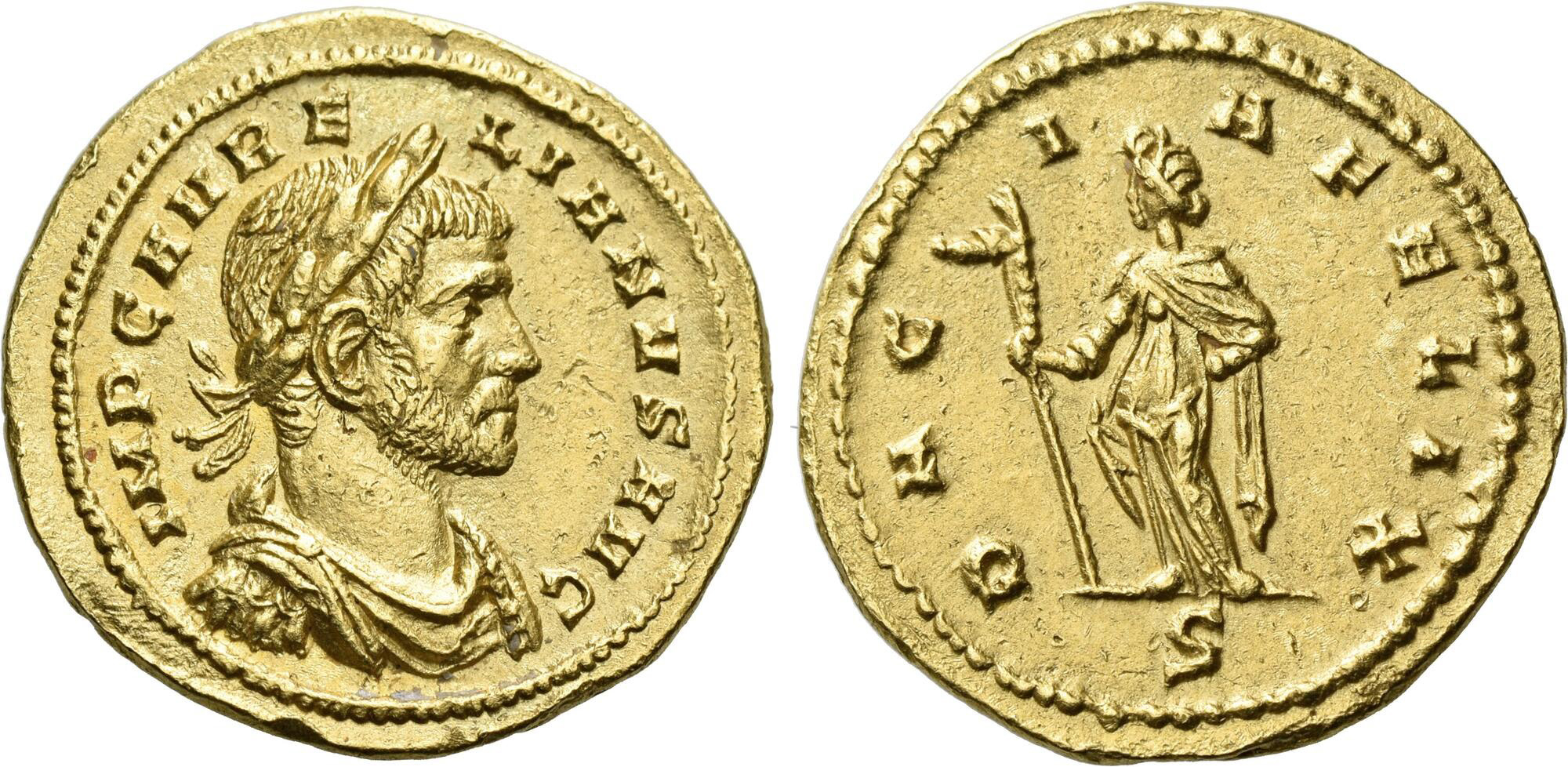
Figure 3: Aureus struck by Aurelian (Milan mint, end 270). Reverse with the legend DACIA FELIX.

Credits/sources: Coin Archives. Numismatica Ars Classica, Auction 146, Lot number 2380 (8 May 2024). https://www.coinarchives.com/a/lotviewer.php?LotID=2367459&AucID=5814&Lot=2380&Val=5a42eacf6427903a2a195f579adf5cc1

South of the Danube and the making of Dacia

At the same time, in the north-eastern part of Moesia inferior provincial life is once again vigorous: an inscription from Callatis ca 274 honored Aurelian as restitutor patriae,56 attesting the progressive recovery after the Bellum Scythicum. The mid-3rd century crisis due to repeated Gothic inroads was gradually overcome through Aurelian’s and Probus’ systematic rebuilding efforts and the process continued during the Tetrarchic regime. An altar was offered to Aurelian by the municipal council of Tropaeum Traiani (ordo splendidissima—precise reflection of ἡ λαμπρότατη βουλή from the nearby Greek Pontic cities),57 while several milestones were set along the reconstructed via militaris by Sexaginta Prista and Capidava in Moesia Inferior.58

After completing the withdrawal from Dacia, Aurelian reorganised a new province bearing the same name south of the Danube, inside the former Moesia, according to his biography in Historia Augusta.59 This short-lived province was called Dacia Aureliana (or Dacia nova), had Serdica as its capital, and the two legions coming from Apulum and Potaissa were assigned new headquarters on the Danube, in Ratiaria (legio XIII Gemina)60 and downstream in Oescus (legio V Macedonica).61 Later the province was divided into Dacia Ripensis and Dacia Mediterranea, having their capitals at Ratiaria and again Serdica.62

Dacia Ripensis (Fig. 4) stretched along the Danube, from the mouth of the Porečka River, somewhere west of Dierna, and down to the confluence with Utus (Vit), which is almost opposite the mouth of left-bank major tributary Alutus (Olt River). Less urbanised than the neighbouring Dacia Mediterranea, the riparian province was in turn much more heavily militarised and important for its mineral wealth. The governor’s seat was established in Ratiaria (Arčar), where the legion XIII Gemina had already been installed, after it had been withdrawn from Apulum by Aurelian. The existence of Dacia Ripensis is suggested in the early 4th century Laterculus Veronensis, which mentions two Daciae south of the Danube within the Dioecesis Moesiae. Only one duke of the province of Dacia Ripensis is known, a certain Tautomedes, in AD 366.63 A formal distinction between Dacia and Dacia altera was registered around 343/344, on the occasion of the Synod of Serdica. Dacia Mediterranea appears for the first time in an inscription dated 364/367 from Bargala, on the border with Dardania, that also mentioned its governor, Antonius Alypius, vir clarissimus.64

Figure 4: Fortifications on both banks of the Danube subordinated to the dux Daciae Ripensis. Notitia Dignitatum Imperii Romani (Basel?, c. 1436).
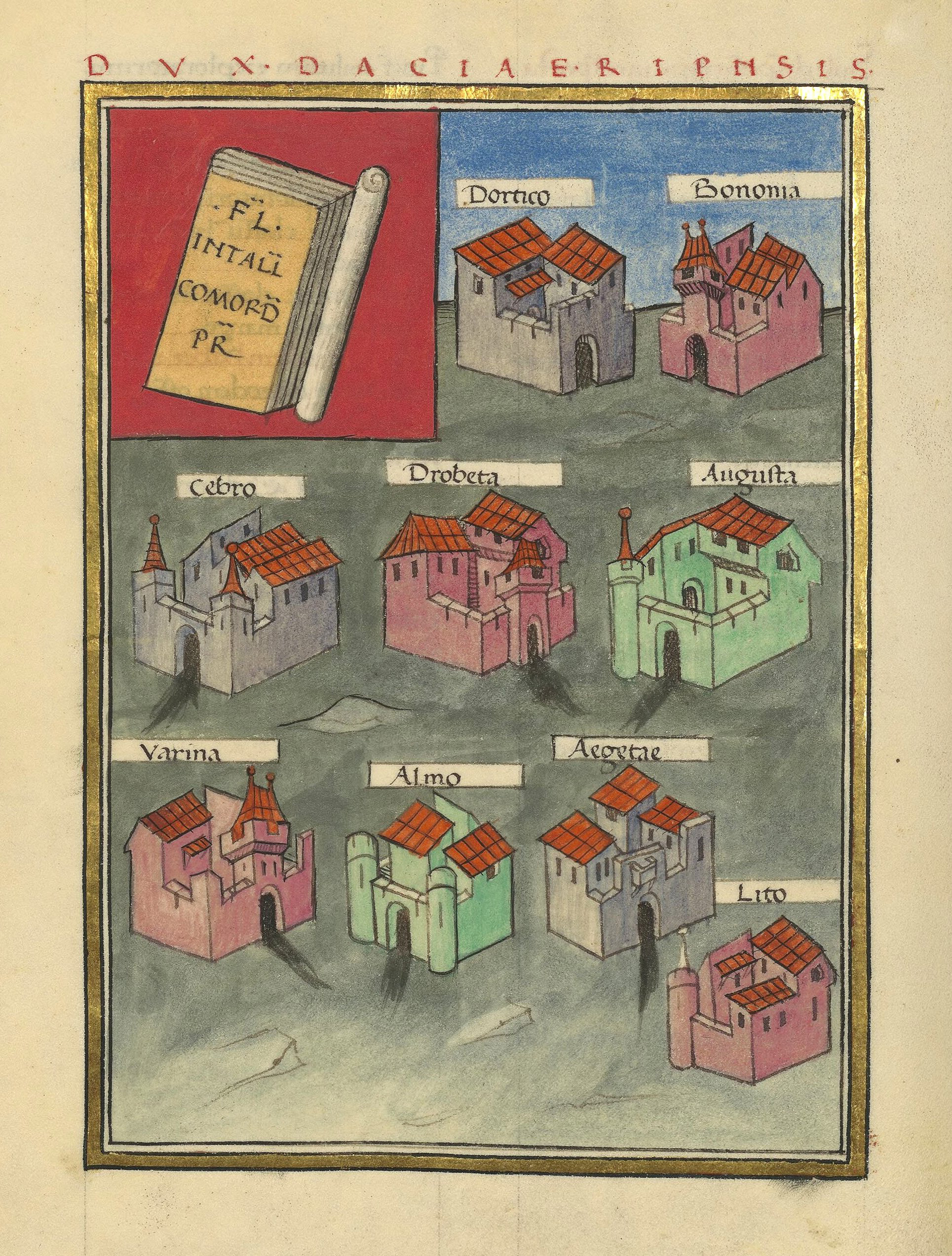
Figure 4: Fortifications on both banks of the Danube subordinated to the dux Daciae Ripensis. Notitia Dignitatum Imperii Romani (Basel?, c. 1436).

Credits/sources: Paris, Bibliothèque Nationale de France. Département des Manuscrits. Latin 9661 (fol. 104 verso).

A Dacia min(or) province is mentioned in the inscription of a sarcophagus discovered at Nicomedia (İzmit, Kocaeli), which is obviously an unofficial way of naming the Dacia south of the Danube.65 It is important to underline that, at least at the moment of his recruitment, around AD 300, the soldier (protector) originated from a region of a still undivided province of Dacia. Another soldier (protector) from the province of Dacia, almost certainly the one created south of the Danube, was also buried in Nicomedia.66 That province, under constant danger during the reign of Diocletian, was restituta in AD 297.67 When exactly it would have been divided is still unclear, since the two Daciae south of the Danube are surely attested, as we already underlined, only in AD 343/344.68 The bronze table from the time of Carus and Carinus does not refer to duae Daciae, as previously thought.69 In AD 313, when Lactantius wrote his pamphlet, only Dacia nova seems to have existed,70 and likewise in AD 321, when Constantine himself wrote to the praeses Daciae.71 It seems therefore that the making of the two Dacian provinces occurred just between AD 321 and 343/344, and was most likely a Constantinian decision, connected to reorganisations after the defeat of Licinius in AD 324. Using an unofficial name for a province in the inscription should not be surprising in this period when things were changing, as one could learn from the famous inscription mentioning the career of Aurelius Gaius.72

Interestingly, there are no traces of the auxiliary units withdrawn from Dacia to the south of the Danube, neither epigraphically nor literary. The Notitia dignitatum records milites Dacisci at Mediolana in Moesia II, as well as an auxilium primorum Daciscorum at Drobeta and an auxilium secundorum Daciscorum at Burgo Zono, in Dacia Ripensis, but it is uncertain that the latter units were created among the former soldiers from various Dacian units.73 This may mean that the units were so demolished that they were never brought to their former strength. Some of the soldiers may have folded into the legions, V Macedonica and XIII Gemina,74 during the Tetrarchic wars and never returned to Dacia Ripensis.

On the left bank of the river, in the segment of limes defended by the future Dacia Ripensis since the start of the Dominate, new fortifications were built or old ones repaired. Their chronology broadly follows that of the neighbouring fortresses south of the Danube. This huge construction effort was archaeologically documented at Dierna, Insula Banului, Drobeta, Puținei, Hinova, Batoţi, Izvoru Frumos, Ostrovul Mare, Izvoarele, Desa and Bistreţ, opposite the fortified points on the right bank (Tekija/Transdierna, Egeta, Aquae, Ratiaria, Cebrus). Most of the former (Dierna, Hinova) are small-sized forts (quadriburgia).75

There is no doubt that the most important bridgeheads controlling more or less extensive territories from the north of the river during the 4th and again during the 6th century AD are the ones in Drobeta and Sucidava. From Drobeta and Sucidava come in fact many of Aurelian’s coins north of the Danube76, and the very high number of the coin assemblage is solid proof for retaining the bridgeheads north of the Danube, regardless of amissio Daciae. Both sites must have been actually the most important evacuation points set up to get the remaining troops and a part of the population out of Dacia. The castellum in Sucidava in particular defended the northern portal of a 2,437 m bridge stretching between Oescus (Ghighen) on the right bank and Sucidava (Celei).77 The great engineering work was inaugurated by Constantine the Great on July 5, 328 and is mentioned by many ancient and Byzantine sources.78 This offensive bridge was defended by a cuneus equitum stablesianorum and supervised by a praefectus of legio V Macedonica, according to the Notitia dignitatum.79 It was in use for several decades, at least until the blocking of the western gate of the Sucidava fort around 364-366, and it most eloquently expresses the active policy of the Empire on the banks of the Ripa Gothica during the 4th century AD. After several Hunnic destructions in the first half of the 5th century, the fort was rebuilt under Justinian.80 Sycibida (Σουκίβιδα) remained functional until the last years of the reign of Maurice (582-602), when it was definitively abandoned by the end of the 6th or beginning of the 7th century.81

Upstream, more stamped bricks of the two legions of Moesia I (IV Flavia from Singidunum and VII Claudia garrisoned in Viminacium) were discovered in several strategic strongholds controlled along the left (north) bank of the Danube, at Banatska Palanka (next to Lederata), Pojejena, Gornea and Șvinița.82 In the sector defended by the province of Moesia I, the fort in Pojejena and the quadriburgium from Gornea are the most significant minor fortifications watching over the left bank of the river.83 The first was destroyed during the great Gothic attacks of the 260s, and soon rebuilt to house vexillations of the legions of Moesia Superior (a detachment of legio VII Claudia, coming from Cuppae).84 It functioned until the 4th century, at least under the Constantinian dynasty, when the local horreum was rebuilt, as documented by a coin of Constantius II (337-361) found in the mortar of its masonry. The small-sized fortification in Gornea seems to have enjoyed an even longer life: built very likely by equites sagittarii led by a praepositus named Italicus85, it served until the early decades of the 5th century, when it was destroyed by the Huns.

Conclusions

To sum up, based on the evidence tackled above, one should notice that the Dacian provinces were restored, after the crises during the reigns of Philip the Arab and Decius (restitutor Daciarum). During the 250s-260s, when the south of the Danube and even some of the Mediterranean regions faced constant attacks and plunders, the provincial life went peacefully in Dacia. New buildings were erected, the destroyed forts were rebuilt, and everything seemed to go back to normal. There were also some significant developments that, however, proved decisive during the disaster of 262 (or 261/263). The most important one was obviously the weakening of the garrison by sending detachments in other parts of Empire, especially in Pannonia and northern Italy, as part of Gallienus’ field army.86 Moreover, one could also think that the units were not brought up to their strenght anymore, as some of the reorganisation actions hastily undertaken (blocking of the gates, repairs of the curtain walls using earlier sculptural or epigraphic material, the “encroachment” and subdivision of internal space, including the via sagularis, by secondary structures introducing sloppy walls) considerably affected the internal layout of the forts. The coming of the entire ala I Batavorum milliaria (obviously with a smaller number of horsemen than usual) from Războieni in the fortress of the legion V Macedonica at Potaissa exemplifies precisely this phenomenon. It is also possible that part of the civilian population, especially in the frontier zone, relocated inside the forts and caused significant supplementary changes of their internal planning. It all happened not because of undergoing attacks and plunders, but because the buildings from the vici militares were destroyed during the previous raids and it was too expensive to begin the reconstructions. This aspect was not so much acknowledged so far. Even so, the relocation of the families of the soldiers inside the forts does not directly mean the decay of the provincial life, but rather a more convenient solution than the rebuilding. We do not have any information about the territory of the cities, forts and fortresses, but probably, leaving aside the possible troubles caused by the bandits, it was relatively safe and suitable for crops. The travel from Potaissa to the spa of Băile Herculane suggests that the province was safe and the life went on without many problems.

Something not explicitly specified in the literary sources happened most likely in 262 and everything collapsed. The empire lost control of the north of the Danube and the remaining units did not receive any payments. The situation remained unstable up to the accession of Aurelian, who simply considered that the province could not be regained and its defence impracticable. Therefore he proceeded to the shortening of the frontier and bringing its limit on the Danube, with the Dacian troops mostly redeployed along the river.87 His Dacicus Maximus title (272?) must be linked to an earlier conflict, unspecified by the sources.88 The future Restorer of the World (restitutor orbis) swiftly decided to make another Dacia, as Augustus made a new Germania as two different military districts after the loss of the territory conquered by Drusus the Elder. The withdrawal was conducted at high speed, following the main imperial road from Porolissum to Drobeta and along the Olt river, heading to Oescus. The abandonment of Dacia Traiana in 271 was accordingly presented by the official propaganda as a successful restoration. The identical name given to the new province south of the Danube defended by the same two legions (V Macedonica and XIII Gemina) was obviously meant to infer the impression that actually nothing had been lost.

The impact was also felt south of the Danube, and most likely the enlargement of the fortresses of Oescus and Novae (Oescus II and Novae II)89 are directly connected with the need to host new units and new settlers from the north of the Danube. At Ratiaria, it seems that the late antique area did not overlap the former structures, but the surveys and archaeological excavations were resumed only one decade ago.90 If this observation will be confirmed, then it is possible that the location of the settlement changed upon the arrival of the legio XIII Gemina and afterwards, during the Constantinian period, in the making of the province of Dacia Ripensis (a lavish residence for the governor and the public bathhouse are currently under systematic excavation). The same goes with the rebuilding of both bridgeheads, Drobeta and Sucidava, a reconstruction process that very probably began during the reign of Aurelian. Not to speak about other epigraphic and archaeological attestations of rebuilding and reshaping of the former auxiliary forts along the Danube, from the Iron Gates area downstream, to the late Roman province of Scythia.

Last but not least, the epigraphic material clearly suggests a sudden and massive implant of Latin-speaking citizens in the future province of Dacia Mediterranea, more precisely in the area of Serdica, at that time a rather exclusively Greek-speaking milieu. Those events reversed the local ratio between Greek and Latin inscriptions until the very end of the Roman rule. Moreover, the political decision of including in Dacia Nova that area remote from the Danube frontier could and should be related with the very subjects settled to the core of the Balkans during the controlled evacuation from the north of the river.91


Bibliographie

Abbreviations

= L’Année épigraphique.

CIL = Corpus inscriptionum Latinarum.

EKG = Enmannsche Kaisergeschichte.

I.Callatis = Avram A. (ed.) (1999), Inscriptiones Scythiae minoris Graecae et Latinae – Inscriptions de Scythie mineure, vol. 3, Bucharest / Paris.

I.Chr. România = Popescu E. (ed.) (1976), Inscriptiones intra fines Dacoromaniae repertae Graecae et Latinae anno CCLXXXIV recentiores – Inscripțiile greceşti şi latine din secolele IV‐XIII descoperite în România, Bucharest (Inscriptiones Daciae et Scythiae Minoris antiquae – Inscripțiile antice din Dacia și Scythia Minor).

I.Dacia Rom. = Inscriptiones Daciae Romanae – Inscripțiile Daciei romane.

ILBulg = Gerov B. (ed.) (1989), Inscriptiones Latinae in Bulgaria repertae – Латинските надписи, намерени в България, ed. G. Mihailov, Sofia.

ILD = Petolescu C.C. (ed.) (2005-2016), Inscripţii latine din Dacia, Bucharest.

ILS = Dessau H. (ed.) (1892-1916), Inscriptiones Latinae selectae, Berlin.

I.Tropaeum = Popescu E. (ed.) (2015), Inscriptiones Scythiae minoris Graecae et Latinae – Inscriptions de Scythie mineure, vol. 4, Bucharest / Paris.

PG = Patrologiae cursus completus. Series Graeca.

PLRE I = Jones A.H.M., Martindale J.R., Morris J. (1971), The Prosopography of the Later Roman Empire, vol. 1, Cambridge.

RIC = Roman Imperial Coinage.

Primary Sources

Adler A. (ed.) (1931), Suidae Lexicon, vol. 2, Leipzig.

Adler W., Tuffin P. (trans.) (2002), The Chronography of George Synkellos. A Byzantine Chronicle of Universal History from the Creation, Oxford / New York.

Arnaud-Lindet M.-P. (ed. and trans.) (1991), Orose, Histoires (contre les païens), vol. 3, Paris (Collection des universités de France. Série latine, 297).

Banchich T.M., Meka J.A. (trans.) (2001), [Festus], Breviarium of the Accomplishments of the Roman People, Buffalo (Canisius College Translated Texts, 2): https://web.archive.org/web/20230326023722/http://www.roman-emperors.org/festus.htm.

Bird H.W. (trans.) (1993), Eutropius, Breviarium, Liverpool (Translated Texts for Historians, 14).

Bird H.W. (trans.) (1994), Aurelius Victor, De Caesaribus, Liverpool (Translated Texts for Historians, 17).

Bleckmann B., Gross J. (ed., trans.) (2018), Eutropius, Breviarium ab Urbe condita, Paderborn (Kleine und fragmentarische Historiker der Spätantike, B3).

Bleckmann B., Nickbakht M.A., Scardino C. (ed., trans.) (2022), Enmannsche Kaisergeschichte – Rufius Festus, Breviarium, Paderborn (Kleine und fragmentarische Historiker der Spätantike, B1 / B4).

Creed J.L. (ed., trans.) (1984), Lactantius, De mortibus persecutorum, Oxford (Oxford Early Christian Texts).

de Boor C. (ed.) (1883), Theophanis Chronographia, vol. 1, Leipzig.

Desbordes O., Ratti S. (ed., trans.) (2000), Histoire auguste, vol. 4/2, Paris (Collection des universités de France. Série latine, 359).

Fear A.T. (trans.) (2010), Seven Books History against the Pagans, Liverpool (Translated Texts for Historians, 54).

Helm R. (ed.) (1984), Eusebius Werke, vol. 7, Berlin (Die griechischen christlichen Schriftsteller der ersten Jahrhunderte) [3rd edn rev. by U. Treu].

Lassandro D. (ed.) (1992), XII Panegyrici Latini, Turin (Corpus scriptorum Latinorum Paravianum).

Magie D. (trans.) (1932), The Scriptores Historiae Augustae, vol. 3, Cambridge (MA) / London (The Loeb Classical Library, 263).

Mommsen T. (ed.) (1882), Iordanis Romana et Getica, Berlin (Monumenta Germaniae historica. Auctores antiquissimi, 5/1).

Mommsen T., with the assist. of P. Krüger (ed.) (1904), Theodosiani libri XVI cum Constitutionibus Sirmondianis, vol. 1/2, Berlin.

Mosshammer A.A. (ed.) (1984), Georgii Syncelli Ecloga chronographica, Leipzig (Bibliotheca scriptorum Graecorum et Romanorum Teubneriana).

Neira Faleiro C. (ed.) (2005), La Notitia dignitatum. Nueva edición crítica y comentario histórico, Madrid (Nueva Roma, 25).

Nickbakht M.A., Scardino C. (ed., trans.) (2021), Aurelius Victor, Historiae abbreviatae, Paderborn (Kleine und fragmentarische Historiker der Spätantike, B2).

Nixon C.E.V., Saylor Rodgers B. (trans.) (1994), In Praise of Later Roman Emperors. The Panegyrici Latini, Berkeley / Los Angeles / Oxford (Transformation of the Classical Heritage, 21).

Paschoud F. (ed., trans.) (1996), Histoire auguste, vol. 5/1, Paris (Collection des universités de France. Série latine, 335).

Städele A. (ed., trans.) (2003), Laktanz, De mortibus persecutorum – Die Todesarten der Verfolger, Turnhout (Fontes Christiani, 43).

Van Nuffelen P., Van Hoof L. (trans.) (2023), Jordanes, Romana and Getica, Liverpool (Translated Texts for Historians, 75).

Veh O. (ed., trans.) (1977), Prokop: Werke, vol. 5, Munich (Tusculum-Bücherei, 5).

Secondary Sources

Bărbulescu M. (1987), Din istoria militară a Daciei romane. Legiunea V Macedonica și castrul de la Potaissa, Cluj-Napoca.

Bărbulescu M. (1994), Potaissa. Studiu monografic, Turda (Dissertationes Musei Potaissensis, 1).

Bărbulescu M. (2012), Inscripțiile din castrul legionar de la Potaissa – The Inscriptions of the Legionary Fortress at Potaissa, Bucharest.

Berressem B.N. (2018), Die Repräsentation der Soldatenkaiser. Studien zur kaiserlichen Selbstdarstellung im 3. Jh. n. Chr., Wiesbaden (Philippika. Altertumswissenschaftliche Abhandlungen, 122).

De Blois L. (2017), “Invasions, Deportations, and Repopulation. Mobility and Migration in Thrace, Moesia Inferior, and Dacia in the Third Quarter of the Third Century AD”, in E. Lo Cascio, L.E. Tacoma (eds), The Impact of Mobility and Migration in the Roman Empire. Proceedings of the Twelfth Workshop of the International Network Impact of Empire, Rome, June 17-19, 2015, Leiden / Boston (Impact of Empire. Roman Empire, ca. 200 BC-AD 476, 22), p. 42-54.

Bondoc D. (2009), The Roman Rule to the North of the Lower Danube during the Late Roman and Early Byzantine Period, Cluj-Napoca (The Center for Roman Military Studies, 4).

Cenati C. (2023), Miles in Urbe. Identità e autorappresentazione nelle iscrizioni dei soldati di origine danubiana e balcanica a Roma, Roma (Epigrafia e Antichità, 49).

Dimitrov Z. (2013-2014), “Latest Data from Archaeological Excavations of Ratiaria. Architectural Complexes and Problems of the Studies”, Oltenia. Studii și comunicări. Arheologie-Istorie, 20-21, p. 105-119.

Dimitrov Z. (2015), “Resumption of the Regular Archaeological Excavations of Ratiaria – New Data, Problems and Prospects of the Studies in the Early Byzantine Era”, in M. Rakocija (ed.), Ниш и Византија, Зборник радова XIII. Тринаест међународни научни скуп, Ниш, 3-6. јун 2013: Стефан Немања између истока и запада – Niš and Byzantium, Symposium/The Collection of Scientific Works XIII. Thirteen International Symposium, Niš, 3-6 June 2013: Stefan Nemanja between East and West (Niš/NKS), p. 185-196.

Dyczek P. (1998), “Via inscriptionum at Novae”, Novensia, 10, p. 17-29.

Ehling K., Hartmann U. (2008), “Die Primärquellen”, in K.-P. Johne, U. Hartmann, T. Gerhardt (eds), Die Zeit der Soldatenkaiser. Krise und Transformation des Römischen Reiches im 3. Jahrhundert n. Chr. (235-284), Berlin, p. 53-58.

Estiot E. (1995), Ripostiglio della Venèra. Nuovo catalogo illustrato, vol. 2/1, Rome.

Găzdac C. (1998), “The Monetary Circulation and the Abandonment of Dacia – A Comparative Study”, Acta Musei Napocensis, 35/1, p. 229-234.

Găzdac C. (1999), “The Monetary Circulation in the Main Settlements from Roman Dacia from 244 to 332 AD”, Carnuntum Jahrbuch 1998, p. 25-49.

Găzdac C. (2002), “Monetary Circulation and the Abandonment of the Auxiliary Forts in Roman Dacia”, in P. Freeman, J. Bennett, Z.T. Fiema, B. Hoffmann (eds), Limes XVIII. Proceedings of the XVIIIth International Congress of Roman Frontier Studies held in Amman, Jordan (September 2000), Oxford (BAR. International Series, 1084), p. 737-756.

Găzdac C. (2010), Monetary Circulation in Dacia and the Provinces from the Middle and Lower Danube from Trajan to Constantine I (AD 106-337), Cluj-Napoca (Coins from Roman Sites and Collections of Roman Coins from Romania, 7) [2nd edn].

Găzdac C., Suciu V., Alföldy-Găzdac Á. (2009), APVLVM, Cluj-Napoca (Coins from Roman Sites and Collections of Roman Coins from Romania, 5).

Găzdac C., Neagoe M., Alföldy-Găzdac Á., Neagoe O. (2015), DROBETA. The Never Abandoned City of Roman Dacia, Cluj-Napoca (Coins from Roman Sites and Collections of Roman Coins from Romania, 9).

Geiger M. (2013), Gallienus, Frankfurt am Main / Bern / Brussels.

Gudea N., Zahariade M. (2016), Dacia Ripensis. Festungen an der Nordgrenze der Provinz und ihre Truppenkörper, Amsterdam (Classical and Byzantine Monographs, 88).

Hartmann U. (2008), “Die literarischen Quellen”, in K.-P. Johne, U. Hartmann, T. Gerhardt (eds), Die Zeit der Soldatenkaiser. Krise und Transformation des Römischen Reiches im 3. Jahrhundert n. Chr. (235-284), Berlin, p. 19-44.

Heeren S. (2016), “The Theory of ‘Limesfall’ and the Material Culture of the Late 3rd Century”, Germania, 94, p. 185-209.

Hügel P. (2003), Ultimele decenii ale stăpânirii romane în Dacia (Traianus Decius – Aurelian), Cluj-Napoca (Dissertationes Daciae, 2).

Kaiser A.M. (2015), “Egyptian Units and the Reliability of the Notitia dignitatum, pars Oriens”, Historia, 64/2, p. 243-261.

Kos K. (1995), “Sub principe Gallieno . . . amissa Raetia? Numismatische Quellen zum Datum 259/260 n. Chr. in Raetien”, Germania, 73, p. 131-144.

Johne K.-P. (2008), “Die Historia Augusta”, in K.-P. Johne, U. Hartmann, T. Gerhardt (eds), Die Zeit der Soldatenkaiser. Krise und Transformation des Römischen Reiches im 3. Jahrhundert n. Chr. (235-284), Berlin, p. 45-51.

Jones C.P. (2020), “Dexippus and the Third-Century Plague”, in F. Mitthof, G. Martin, J. Grusková (eds), Empire in Crisis: Gothic Invasions and Roman Historiography. Beiträge einer internationalen Tagung zu den Wiener Dexipp-Fragmenten (Dexippus Vindobonensis), Wien, 3.-6. Mai 2017, Vienna (Tyche. Supplementband, 12), p. 159-164.

Kienast D., Eck W., Heil M. (2017), Römische Kaisertabelle. Grundzüge einer römischen Kaiserchronologie, Darmstadt [6th edn].

Madgearu A. (2011), Istoria militară a Daciei post-romane, 275-376, Târgoviște.

Mallan C., Davenport C. (2015), “Dexippus and the Gothic invasions: interpreting the new Vienna fragment (Codex Vindobonensis Hist. gr. 73, ff. 192v-193r)”, The Journal of Roman Studies, 105, p. 203-226.

Martin G., Grusková J. (2014), “„Dexippos Vindobonensis“(?). Ein neues Handschriftenfragment zum sog. Herulereinfall der Jahre 267/268”, Wiener Studien, 127, p. 101-120.

Matei D. (2021), Castrele Daciei după părăsirea lor de către armata romană, Cluj-Napoca.

Mitthof F., Matei-Popescu F. (2023), “Gab es im Jahr 283 n. Chr. zwei dakische Provinzen südlich der Donau? Zur Lesung und Deutung der Inschrift AE 1912, 200 = ILBulg 188”, in L. Mihailescu-Bîrliba, I. Piso (eds), Romans and Natives in the Danubian Provinces (1st-6th C. AD), Wiesbaden (Philippika. Altertumswissenschaftliche Abhandlungen, 173), p. 553-565.

Moga V. (1985), Din istoria militară a Daciei romane. Legiunea XIII Gemina, Cluj-Napoca.

Nemeti S., Varga R., Deac D. (2024), “A vignette from Dacia under Philippus Arabs: Revisiting the altars of Marcus Publicianus Rhenus”, Chiron, 54, p. 429-447.

Opreanu C.H. (2004), “Dacia, Pannonia and Raetia in the Time of Gallienus: A Comparative Approach”, in Actes du XIVe Congrès UISPP, Université de Liège, Belgique, 2-8 septembre 2001 – Acts of the XIVth UISPP Congress, University of Liège, Belgium, 2-8 September 2001. Section 13: Époque romaine. Session générale et posters – The Roman Age. General Sessions and Posters, Oxford (BAR. International Series, 1312), p. 13-18.

Opriș I.C. (2018), “Aurélien en trois fois. Bornes milliaires à Capidava et dans le territorium Capidavense”, in M. Popescu, I. Achim, F. Matei-Popescu (eds), La Dacie et l’Empire romain. Mélanges d’épigraphie et d’archéologie offerts à Constantin C. Petolescu, Bucharest, p. 159-172.

Opriș I.C. (2021), “Milestones from Capidava and territorium Capidavense. Possibly also, on Emperor Aurelian’s War against the Carpi, inter Carsium et Sucidavam”, Journal of Ancient History and Archaeology, 8/4, p. 62-88.

Opriș I.C., Ionescu A.D., Surleanu A.C., Stănișteanu A.E., Dragomir M., Simion C.G., Cercel A.I., Speriatu V., Dobrinescu C., Șerbănescu A., Călina V. (2022), “Pons per Danuvium ductus. Date noi despre podul lui Constantin cel Mare dintre Oescus și Sucidava”, Cercetări arheologice, 29/2, p. 631-664.

Öztürk H.S., Dana D. (2021), “From Dacia Minor to Nicomedia: Iconography, Onomastics and a New Career of the Late Roman Army. The Sarcophagus of Tziampo, protector divini lateris”, Acta Classica Mediterranea, 4, p. 29-65.

Petac V. (1998-2003), “Considerații cu privire la data finală a tezaurului monetar imperial descoperit la Alba Iulia în anul 1963”, Buletinul Societății Numismatice Române, 92-97, p. 123-153.

Petculescu L. (2017), “The Abandonment of Dacia and the Imperial Propaganda”, Ephemeris Napocensis, 27, p. 259-264.

Petolescu C.C. (2010), Dacia. Un mileniu de istorie, Bucharest.

Petolescu C.C. (2013), “Cronica epigrafică a României (XXXII, 2012)”, Studii și cercetări de istorie veche și arheologie, 64/3-4, p. 371-388.

Petolescu C.C. (2021), Armata romană din Dacia, Bucharest.

Piso I. (2013), Fasti provinciae Daciae, vol. 2, Bonn (Antiquitas, Reihe  : Abhandlungen zur alten Geschichte, 60).

Piso I. (2014), “Zur Reform des Gallienus anläßlich zweier neuer Inschriften aus den Lagerthermen von Potaissa”, Tyche, 29, p. 125-146 (= Id. 2023, p. 201-217).

Piso I. (2018), “Das verhängnisvolle Jahr 262 und die amissio Daciae”, in L. Vagalinski, M. Raycheva, D. Boteva, N. Sharankov (eds), Proceedings of the First International Roman and Late Antique Thrace Conference “Cities, Territories and Identities” (Plovdiv, 3rd – 7th October 2016), Sofia (Известия на Националния археологически институт – Bulletin of the National Archaeological Institute, 44), p. 427-440 (= Id. 2023, p. 295-308).

Piso I. (2023), Unter dem Siegel Roms. Ausgewählte Schriften (2004–2020), Vienna (Österreichische Akademie der Wissenschaften. Philosophisch-Historische Klasse. Denkschriften, 548 / Veröffentlichungen zur Epigraphik, 2).

Pîslaru M. (2009), The Roman Coins from Potaissa. Legionary Fortress and Ancient Town, Cluj-Napoca (“Babeș-Bolyai” University Cluj-Napoca. The Publications of the Institute of Classical Studies, 11).

Ruscu D. (1998), “L’abandon de la Dacie romaine dans les sources littéraires”, Acta Musei Napocensis, 35/1, p. 235-254.

Sartre M. (1983), “Les voyages d’Aurelius Gaius, soldat de Diocletien, et la nomenclature provinciale”, Epigraphica Anatolica, 2, p. 25-32.

Schade K. (2008), “Die Archäologie”, in K.-P. Johne, U. Hartmann, T. Gerhardt (eds), Die Zeit der Soldatenkaiser. Krise und Transformation des Römischen Reiches im 3. Jahrhundert n. Chr. (235-284), Berlin, p. 59-87.

Tomas A. (2021), “When a Cemetery Must Become Forgotten. Funerary Rites, Commemoration, and the Fate of the Eastern Necropolis at Novae”, in K. Narloch, T. Płóciennik, J. Żelazowski (eds), with the assist. of J. Recław, Nunc decet caput impedire myrto. Studies dedicated to Professor Piotr Dyczek on the Occasion of his 65th Birthday, Warsaw, p. 139-156.

Țentea O., Matei-Popescu F., Timoc C. (2023), “Castrele romane din sud-vestul Daciei. O trecere în revistă și o actualizare”, Cercetări arheologice, 30/2, p. 763-804.

Velkov V. (1977), Cities in Thrace and Dacia in Late Antiquity (Studies and Materials), Amsterdam (Publications of the Henri Frankfort Foundation, 3).

Velkov V. (1998), “Aurélien et sa politique en Mésie et en Thrace”, in E. Frézouls, H. Jouffroy (eds), Les empereurs illyriens. Actes du colloque de Strasbourg, 11-13 octobre 1990, organisé par le Centre de recherche sur l’Europe centrale et sud-orientale, Strasbourg (Contributions et travaux de l’Institut d’histoire romaine, 8), p. 155-169.

Vulić N. (1923), “Les deux Dacies”, Le Musée belge, 27, p. 253-259.

Vulpe R. (1973), “Considérations historiques autour de l’évacuation de la Dacie par Aurélien”, Dacoromania, 1, p. 41-51.

Zahariade M. (2014-2015), “The Dacia Ripensis Section in Notitia Dignitatum (XLII)”, Thraco-Dacica. Serie nouă, 6-7, p. 119-154.

Zuckerman C. (1988), “Legio V Macedonica in Egypt: CPL 199 Revisited”, Tyche, 3, 1988, p. 279-287.

Zugravu N. (2020), “Ancora sulla Dacia restituta”, Studia Antiqua et Archaeologica, 26/1, p. 69-94.

Notes

1 For an overview and critique of the concept of crisis during that period see Beeressem 2018, p. 12-15. Retour au texte

2 Jones 2020. Retour au texte

3 About the concept and its partial misleadingness see Berressem 2018, p. 9-11. Retour au texte

4 PLRE I, p. 960 (Sex. Aurelius Victor 13); Hartmann 2008, p. 21. Retour au texte

5 Ed. Nickbakht, Scardino 2021, p. 102, 104: His prospere ac supra uota cedentibus more hominum secundis solutior rem Romanam quasi naufragio dedit cum Salonino filio, cui honorem Caesaris contulerat, adeo uti Thraciam Gothi libere pergressi Macedonas Achaeosque et Asiae finitima occuparent, Mesopotamiam Parthi, Orientis latrones seu mulier dominaretur, Alamannorum uis tunc aeque Italiam, Francorum gentes direpta Gallia Hispaniam possiderent uastato ac paene direpto Tarraconnensium oppido nactisque in tempore nauigiis pars in usque Africam permearet. Et amissa trans Istrum, quae Traianus quasiuerat. Trans. Bird 1994, p. 32-33. Retour au texte

6 PLRE I, p. 317 (Eutropius 2); Hartmann 2008, p. 28-29. Retour au texte

7 Ed. Bleckmann, Gross 2018, p. 162: Alamanni uastatis Galliis in Italiam penetrauerunt. Dacia, quae a Traiano ultra Danubium fuerat adiecta, tum amissa est. Graecia, Macedonia, Pontus, Asia uastata est per Gothos, Pannonia a Sarmatis Quadisque populata est, Germani usque ad Hispanias penetrauerunt et ciuitatem nobilem Tarraconem expugnauerunt, Parthi Mesopotamia occupata Syriam sibi coeperant uindicare. Trans. Bird 1993, p. 57. Retour au texte

8 Ed. Nickbakht, Scardino 2021, p. 166: Prouinciam Daciam, quam Traianus ultra Danubium fecerat, intermisit uastato omni Illyrico et Moesia desperans eam posse retinere abductosque Romanos ex urbibus et agris Daciae in media Moesia conlocauit appellauitque eam Daciam, quae nunc duas Moesias diuidit et est ⟨in⟩ dextra Danubio in mare fluenti, cum antea fuerit in laeua. Trans. Bird 1993, p. 59. See also Georges Synkellos, Chronography, A.M. 5764 = EKG, fr. 93g (ed. Mosshammer 1984, p. 47014-15): Tὴν Τραϊανοῦ δὲ Δακίαν βαρβάροις ἀφεὶς ἄνδρας καὶ γυναῖκας εἰς τὸ μεσαίτατον τῆς Μυσίας στήσας ἑκατέρωθεν, Δακίαν δὲ μέσην ὀνομάζεσθαι. Trans. Adler, Tuffin 2002, p. 551: “After releasing Trajan’s Dacia to the barbarians, he settled men and women in the middlemost part of Mysia, to be named Middle Dacia, with Mysia on either side.”); and Suda δ 23 = EKG, fr. 93g (ed. Adler 1931, p. 2): Δακία χώρα· ἣν ὁ Τραϊανὸς ἐν τοῖς πέραν τοῦ Ἴστρου χωρίοις κατῴκισε. καὶ ταύτην Αὐρηλιανὸς ἀπέλιπε, κεκακωμένης τῆς Ἰλλυριῶν τε καὶ Μυσῶν χώρας, ἡγούμενος ἀδυνάτως ἔσεσθαι τὴν πέραν ἐν μέσοις τοῖς ποταμοῖς ἀπειλημμένην διασῴζεσθαι. ἐξαγαγὼν οὖν τοὺς ἐκεῖσε Ῥωμαίους ἀπῳκισμένους ἔκ τε τῶν πόλεων καὶ τῶν ἀγρῶν ἐν μέσῃ τῇ Μυσίᾳ καθίδρυσε, τὴν χώραν ὀνομάσας Δακίαν ἣ νῦν ἐν μέσῳ τῶν δύο Μυσιῶν κειμένη διαιρεῖ αὐτὰς ἀπ’ ἀλλήλων. Trans. Bleckmann et alii 2022, p. 194: “Das dakische Land, das Trajan in der jenseits der Donau gelegenen Gegend einrichtete und das Aurelian verließ. Als das Land der Illyrier und Moesier verwüstet wurde, glaubte er, dass es unmöglich sein werde, das jenseits isoliert in der Mitte der Flüsse gelegene Land zu behalten. Er führte also die dort angesiedelten Römer aus den Städten und den Gebieten heraus und siedelte sie in der Mitte Moesiens an, wobei er das Land Dakien nannte, welches nun in der Mitte der beiden moesischen Provinzen liegt und sie voneinander trennt”—commentary by the same: “Das „jenseits isoliert in der Mitte der Flüsse gelegene Land“ bezeichnet in unklarer Weise das dakische Gebiet nördlich der Donau und südlich des Nebenflussystems der Theiss, vielleicht auch westlich des Alutus. Mehr ist der Stelle nicht zu entnehmen”. Retour au texte

9 Ed. Paschoud 1996, p. 50: Cum uastatum Illyricum ac Moesiam deperditam uideret, provinciam Transdanuuianam Daciam a Traiano constitutam, sublato exercitu et prouincialibus reliquit, desperans eam posse retineri, abductosque ex ea populos in Moesia collocauit appellauitque suam Daciam, quae nunc duas Moesias diuidit. Trans. Magie 1932, p. 273. For the almost complete identity between Eutropius and the Historia Augusta, see Stover, Woudhuysen 2023, p. 314, tab. 8.15. Retour au texte

10 Hartmann 2008, p. 25-26. See recently the historical commentary of B. Bleckmann, J. Gross (2018, p. 239): “Diese Nachricht stammt aus der EKG, vgl. Aur. Vict. Caes., 33,3 und Festus 8,2. Da erst Aurelian Dakien räumt, kann Dakien nicht unter Gallienus verloren gegangen sein. Vermutlich waren aber nach dieser Tradition die Schäden in Dakien so irreparabel, dass Aurelian zur Räumung gezwungen war. Der Relativsatz dient weniger einem historischen Rückgriff als der Unterscheidung des traianischen Dakien vom Dakien (südlich der Donau) der eigenen Zeit. In der Rückschau des anonymen Panegyrikers des Constantius I. wird in der Serie der von Gallienus zu verantwortenden Verwüstung oder des Verlustes von Provinzen Dakien nicht erwähnt, vgl. Paneg., 8,10,2–3”; however, Eutropius followed also another tradition, like the anonymous author of the Panegyricus Constantini, who did not blame Gallienus for losing Dacia: (p. 253) “Zentrale Passage zur Evakuierung des traianischen Dakiens und zur Gründung einer neuen, südlich der Donau gelegenen Provinz, vgl. Hist. Aug. Aurelian., 39,7 und Hartmann, Claudius Gothicus 315 mit Anm. 58. Der Verlust Dakiens wird in der Tradition der EKG also nicht als Verlust des Gallienus verbucht.” Retour au texte

11 Hartmann 2008, p. 31-32; Johne 2008. Retour au texte

12 Hartmann 2008, p. 26. Retour au texte

13 Festus, Breviarium of the Accomplishments of the Roman People, VIII, 2 = EKG, fr. 83c + 93c (ed. Bleckmann et alii 2022, p. 266): […] sed sub Gallieno imperatore amissa est et per Aurelianum translatis exinde Romanis duae Daciae in regionibus Moesiae ac Dardaniae factae sunt. (Trans. Banchich, Meka 2001: “[…] but it was lost under Imperator Gallienus, and, after Romans had been transferred from there by Aurelian, two Dacias were made in the regions of Moesia and Dardania.”). On his side, Jerome of Stridon (Chronicle, 302Fi, k and l and 303Fa = EKG, fr. 83b), does not mention the loss of Dacia. Retour au texte

14 Orosius, Histories against the pagans, VII, 22, 7 (ed. Arnaud-Lindet 1991, p. 59): […] nam Dacia trans Danuuium in perpetuum aufertur; […] Trans. Fear 2010, p. 356: “[…] Dacia across the Danube was lost forever; […]”). Retour au texte

15 Jordanes, Roman History, CCXVII (ed. Mommsen 1882, p. 27-28): Sed Gallienus eos dum regnaret amisit Aurelianusque imperator evocatis exinde legionibus in Mysia conlocauit ibique aliquam partem Daciam Mediterraneam Daciamque Ripensem constituit et Dardaniam iunxit. (Trans. Van Nuffelen, Van Hoof 2023, p. 164: “But Gallienus lost them when he was emperor and the emperor Aurelian withdrew the legions from Dacia and stationed them in Moesia. He made some part of Moesia into Dacia Mediterranea and Dacia Ripensis and attached them to Dardania.”). Retour au texte

16 Hartmann 2008, p. 29. Retour au texte

17 Geiger 2013, p. 37. Retour au texte

18 Bleckmann [et alii] 2022, p. 181: “Die EKG unterschied, wie die Übereinstimmungen zwischen Aurelius Victor und Eutrop zeigen, eine erste gute Phase der Herrschaft des Gallienus von einer zweiten schlechten Phase.” Retour au texte

19 Bleckmann [et alii] 2022, p. 193: “Da Räumung Dakiens und Neugestaltung der Provinzen südlich der Donau freilich auch bei Festus, in der Historia Augusta und in der byzantinischen Tradition bezeugt sind, spricht sehr viel dafür, dass die EKG beides in ihrer Aurelianbiographie erwähnt hat.” Retour au texte

20 See also Flügel, Scholz in this volume; Piso 2018, p. 430: “Im Grunde genommen verstand man unter der amissio, dass Dakien praktisch aufgegeben wurde (in diesem Sinn Petolescu 1984, p. 189-190; 1995, p. 123-126; 2010, p. 288-292) und dass Aurelian die Autorität darüber hinreichend wiederhergestellt hat, um die offizielle Aufgabe zu bewerkstelligen.” Retour au texte

21 Panegyrici Latini, VIII (V), 10, 2-3 (ed. Lassandro 1992, p. 285): […] tunc se nimium et Parthus extulerat et Palmyrenus aequauerat; tota Aegyptus Syriaeque defecerant; amissa Raetia, Noricum Pannoniaeque uastatae; Italia ipsa gentium domina plurimarum urbium suarum excidia maerebat; […]. (Transl. Nixon, Saylor Rodgers 1994, p. 122-124: “At that time both the Parthian had too lofty pretensions and the Palmyrene claimed equality; all of Egypt and the Syrias had seceded, Raetia was lost and Noricum and the Pannonias devastated. Italy herself, mistress of nations, lamented the destruction of very many of its cities.”). Retour au texte

22 Kos 1995, p. 131: “Dieser Passus aus der Lobrede wurde sogar als Grundlage für viele Deutungen der historischen Ereignisse in Raetien während der Regierung des Gallienus übernommen.” Retour au texte

23 However, the new results of the archaeological excavations and an improvement in the methods of dating material culture allow to nuance this simplistic and highly positivistic approach, see Heeren 2016. Retour au texte

24 De Blois 2017. Retour au texte

25 See e. g. Petolescu 2010, p. 286-292. Retour au texte

26 Ed. Desbordes, Ratti 2000, p. 33-34: Inter haec Scythae per Euxinum nauigantes Histrum ingressi multa grauia in solo Romano fecerunt. Quibus compertis Gallienus Cleodamum et Athenaeum Byzantios instaurandis urbibus muniendisque praefecit, pugnatumque est circa Pontum et a Byzantiis ducibus uicti sunt barbari. Veneriano item duce nauali bello Gothi superati sunt, cum ipse Venerianus militari perit morte. Atque inde Cyzicum et Asiam, deinceps Achaiam omnem uastarunt et ab Atheniensibus duce Dexippo, scriptore horum temporum, uicti sunt. Vnde pulsi per Epirum, Macedoniam, Moesiam peruagati sunt. (Trans. Magie 1932, p. 45—slightly modified). Retour au texte

27 Martin, Grusková 2014, initially dated by them in AD 267/268. However, both Mallan, Davenport 2015, p. 215-220 and Piso 2015, p. 200-206 convincingly argued that the events happened in AD 262; see also Piso 2018, p. 427: “Aus der Untersuchung der Texte von Zosimos, Synkellos, Zonaras und der HA (bzw. Vita Gall., 5.6) geht hervor, dass wir es eher mit dem Jahr 262 n. Chr. zu tun haben”. Retour au texte

28 Piso 2018, p. 428: “Um auf das Jahr 262 zurückzukommen, ist es ganz sicher, dass vor allem Untermoesien in Mitleidenschaft gezogen wurde. Thrakien konnte nur über Untermoesien erreicht werden. Sollen die Goten Dakien, eine bis in die Mitte des 3. Jhts blühende Provinz, vergessen haben?” and p. 436: “Nur die Summe der Ergebnisse berechtigt die Annahme, dass das Ereignis 262 oder, um vorsichtiger zu sein, irgendwann in den Jahren 261/263 stattgefunden hat.” From an archaeological viewpoint this reading is supported by a hoard concealed in Apulum in a building next to the legionary fortress, see Petac 1998-2003. Retour au texte

29 , 2012, 1215 = Piso 2014, p. 128 = ILD, 948: Aesculapio et Hygiae / pro salute d(omini) n(ostri) Imp(eratoris) / ⟦Aem(ili) Aemil[i]a[ni] Aug(usti)⟧ / M(arcus) Publicianus Rhe/[n]us praef(ectus) alae Bat(avorum) (miliariae) / [a]gens vice praef(ecti) leg(ionis). Retour au texte

30 , 2012, 1216 = Piso 2014, p. 128 = ILD, 947: Fortunae / pro salute d(omini) n(ostri) Imp(eratoris) / ⟦[Ae]m(ili) A[e]m[i]liani Aug(usti)⟧ / M(arcus) Publicianus Rhesus / praef(ectus) alae I Bat(avorum) (miliariae) a/gens vice praef(ecti) leg(ionis). Retour au texte

31 Piso 2014, 127: “Die spärlichen Buchstabenreste lassen es nicht zu, den Namen des Gallienus zu rekonstruieren. Der erste Buchstabe ist keineswegs rund; er ist ein A, wofür die Inschrift Nr. 1 uns Gewissheit gibt. Dank diesem A und den übrigen Spuren kann man in Z. 3 der Inschrift Nr. 1 [[Ạẹṃ(ilii) Ạẹṃịḷ[i]ạ[ni] Ạụg̣(usti)]] und in Z. 3 der Inschrift Nr. 2 [[[Ae]ṃ(ilii) Ạ[e]ṃ[i]ḷịạṇị Ạụg̣(usti)]] lesen. Der eradierte Name ist somit Kaiser L. Aemilius Aemilianus zuzuweisen, von dem unten die Rede sein wird.” Retour au texte

32 Petolescu, 2013, nr. 1578−1579, p. 377-378: [[Re]]g[[alianus Aug(ustus)]] or [[In]]g[[enuus Aug(ustus)]]. For the biographies and dating of both usurpers see Historia Augusta, Tyr. trig. 9, 1; 10 and Kienast, Eck, Heil 2017, p. 214-215. One should also mention a very recent lecture due to Nemeti, Varga, Deac 2024, p. 435 that read [[M(arci) Iu]l[(ii) Philippi Aug(usti)]]. As a consequence, the authors reinterpreted the two altars as dedicated to the health of Philippus Arabs and placed them in the context of the emperor’s war against the Carpi. Retour au texte

33 , 1993, 1231 a-b; Ehling, Hartmann 2008, p. 54. Retour au texte

34 CIL, III, 875 = ILS, 4345: Deo Azizo Bono P[uero conserva]/tori pro salutem dd(ominorum) [nn(ostrorum) Valeriani et Gal]/lieni Augg(ustorum) et Valerian[i nobiliss(imi) Caesaris] / et Corneliae Salonina[e Augustae et genio(?)] / leg(ionis) V Mac(edonicae) III piae fid(elis) [- - -] / Donatus praef(ectus) leg(ionis) eiusde[m agens vice legati(?)] / templum ince[p]tum perfecit v(otum) [s(olvit) l(ibens) m(erito (?)]; Piso 2018, p. 435: “Die Inschrift von Potaissa an Azizus ist aufgrund der Epitheta der legio V Macedonica in die Jahre 255/256 zu datieren.” Retour au texte

35 CIL, III, 1560 = ILS, 3845 = I.Dacia Rom., III/1, 54 = ILD, 184: Di{i}s Magnis / et Bonis Aescu/lapio et Hygiae / Marc(us) Aur(elius) Vete/ranus praef(ectus) leg(ionis) / XIII G(eminae) Gall(i)eniana(e) / v(otum) l(ibens) m(erito) p(osuit); Piso 2018, p. 435: “Jedenfalls ist dies die letzte datierbare Inschrift der Provinz Dakien, was nahelegt, dass der Zeitpunkt der Katastrophe vom Sommer 260 nicht sehr entfernt war.” Retour au texte

36 CIL, III, 7971 = ILS, 554 = I.Dacia Rom., III/2, 82: P(ublio) Licinio Corne/lio Valeriano / nobilissimo Caes(ari) / filio / Imp(eratoris) Caes(aris) P(ublii) Licini(i) / Egnati(i) Gallieni / Pii Fel(icis) invicti Aug(usti) / col(onia) Ulp(ia) Trai(ana) Aug(usta) / Dacica Sarmiz(egetusa) / metro(polis) publice. Retour au texte

37 CIL, III, 1550 = I.Dacia Rom., III/1, 132: Corneliae / Saloninae / Au[g(ustae)] coniugi / Gallieni Aug(usti) n(ostri) /5 ordo mun(icipii) / Tib(iscensium) dev(otus) num(ini) / maiesta[t(ique)] eius. Retour au texte

38 CIL, III, 1577 = 8010 = I.Dacia Rom., III/1, 77 = ILD, 188: Imp(eratori) Caes(ari) P(ublio) Lici(nio) / Gallieno p(io) f(elici) Aug(usto) / pont(ifici) max(imo) tr(ibunicia) po[t(estate)] / cons(uli) III procons(uli) / coh(ors) III Delmatarum / Valerian(a) Gallie/nae |(miliaria) eqq(uitata) c(ivium) R(omanorum) p(ia) f(idelis) / devota Numini / maiestatique eor(um). Retour au texte

39 CIL, III, 1176 = ILS, 514 = I.Dacia Rom., III/5, 431: Imp(eratori) Caes(ari) C(aio) / Mess(io) Quinto / Traiano / Decio [Pio F(elici) Aug(usto)] / p(ontifici) m(aximo) trib(unicia) [pot(estate)] / II co(n)s(uli) II p(atri) p(atriae) / restituto/ri Daciarum / col(onia) nova Apul[en]s(is). Doubts have been raised if the gilded bronze head of a statue, found at Ulpia Traiana Sarmizegetusa, depicts Decius or not, Schade 2008, p. 75; Berressem 2018, p. 172, note 967: “zwar ist die stilistische Einordnung um die Jahrhundertmitte durchaus gerechtfertigt, allerdings weicht das Bildnis in mehreren Merkmalen von der Ikonographie des Decius ab; vgl. etwa die für Decius uncharakteristische Fülle des strähnigen Vollbarts, die engstehenden Augen sowie die fleischige Durchformung der Gesichtszüge” and p. 378, no. 47 (Traianus Decius’ portrait from Musei Capitolini in Rome). Retour au texte

40 See the epigraphic sources collected by Petolescu 2021, p. 72-73, 114-115, at Poetovio, Mediolanum, Dertona and Ticinum. They became part of Gallienus’ field army in the war against the Alamanni in the northern part of Italy. Retour au texte

41 Bărbulescu 1994, p. 173-183; Matei 2021, p. 113-184. Retour au texte

42 CIL, VI, 2605. See also Velkov 1998, p. 160; Cenati 2023, p. 348, C 331. Retour au texte

43 Velkov 1998, p. 160. Retour au texte

44 Găzdac 1998; 1999; 2002; 2010; Hügel 2003, p. 84-124. Retour au texte

45 Găzdac 1998, p. 231. Retour au texte

46 Hügel 2003, p. 120-121. Retour au texte

47 Găzdac 2002, p. 738; Hügel 2003, p. 86, 90-92. Retour au texte

48 Găzdac 1999, p. 37; 2010, p. 199; Hügel 2003, p. 87. Retour au texte

49 Găzdac 1999, p. 26-28, pl. 2-3; Hügel 2003, p. 90. Retour au texte

50 Pîslaru 2009, p. 83, 87, 313 (tab. VII), 315 (tab. VIII), 318 (tab. IX), 322 (tab. X), 326 (tab. XI), 330 (tab. XII), 334 (tab. XIII), 337 (tab. XIV), 344 (tab. XVIII). Retour au texte

51 Găzdac et alii 2009, p. 6, 47-57. There are very few hoards ending with coins of Aurelian: excepting for Apulum III hoard, another one also dominated by antoniniani was found in Viișoara (Dolj County, Romania), in southern Dacia, see Găzdac 2010, p. 144 and passim; Petolescu 2010, p. 286. The latter contained 266 issues of Aurelian out of a total of 612 coins. Some 25 km to the north-east and close to the river Olt, another small hoard was recently found (2019) in Slătioara (Olt County), on the occasion of the excavations preceding the construction of an express road. Out of the 7 coins 3 are issues of Aurelian. One should remark that both last hoards were concealed near a “route of escape” from Dacia, along the Olt river to its junction with the Danube. Retour au texte

52 Găzdac 1998, p. 230-231; 1999, p. 36-37. Retour au texte

53 RIC, V/1, Aurelian, 108; Estiot 1995, no 1557. See also Hügel 2003, p. 121-124, with bibliography. Retour au texte

54 Petculescu 2017, p. 263. Retour au texte

55 Estiot 1995, p. 75. Retour au texte

56 CIL, III, 7586 = I.Callatis, 96. Retour au texte

57 CIL, III, 12461 (= 7484) = I.Tropaeum, 13. Retour au texte

58 Petolescu 2010, p. 87, 280; Opriș 2018; 2021. Retour au texte

59 Historia Augusta, Divus Aurelianus, XXXIX, 7. See also Velkov 1977, p. 21; Petolescu 2010, p. 309. Retour au texte

60 Moga 1985, p. 30-31. Retour au texte

61 Bărbulescu 1987, p. 32-33. Retour au texte

62 See Velkov 1977, p. 85-99, for the cities in both Dacia Ripensis and Dacia Mediterranea. Retour au texte

63 Theodosian Code, XV, 1, 13. Retour au texte

64 PLRE I, p. 48 ((A)NTONIVS ALYPIVS 11). Retour au texte

65 Öztürk, Dana 2021 = AÉ, 2021, 01207: D(is) M(anibus) / Tziampo protector divini lateris monumentum meum / restauravi oriundus ex regione Pieucense prov(incia) Dacia min(ore), / vixit (!) L et volo neminem licere hic poni nis(i) nesi filio suo / Severo aut coniuge{t} sua, milita(v)it annis caballarius VIIII / et ordinari(u)s XI et protexit protector annis X. Si autem / alter ausus fuerit aperire davit fisco folles XX / et civitati folles X. Toto milita(v)it annos XXX / valete transitores. Retour au texte

66 , 1977, 00791: D(is) M(anibus) / Valerius Ursicinus protector / de provincia Dacia vico Dissena/nis fecit stipendia XXIII / quan diu vita fuit data vixi / bene cognitus semper / annis optinui quinquaginta meo fato / latitias (h)abui epulas vitan que beatas / iam quies incessit anima est suo cred/ita cursum sedibus infernis teneo / no(n) sit dolor ulli // Valerius Mani/ca prot(ector) fratri suo dulcissi[m]/o bene merenti titulo(m) / posu[it] / valete viatores. Retour au texte

67 Panegyrici Latini, VIII (V), 3, 3; Zugravu 2020, p. 81: “Questa dunque non poteva essere l’ex-provincia della Dacia a nord del Danubio, il cui statuto giuridico romano era cessato di diritto e definitivamente con l’abbandono ufficiale, ma la provincia della Dacia sud-danubiana, in stretto legame con gli eventi che avevano richiesto la presenza di Diocleziano sul fronte danubiano negli anni 289, 290-291, 293-294, 296.” Retour au texte

68 Still useful Vulić 1923. Retour au texte

69 , 1912, 200 = ILBulg, 188; Mitthof, Matei-Popescu 2023. Retour au texte

70 Lactantius, On the Deaths of the Persecutors, IX, 2 (ed. Städele 2003, p. 110): [...] mater eius Transdanuuiana infestantibus Carpis in Daciam novam transiecto amne confugerat. (trans. Creed 1984, p. 15: “[…] his mother came from the other side of the Danube; she had crossed the river when the Carpi attacked and had taken refuge in New Dacia.”). Retour au texte

71 Theodosian Code, II, 192, 2. Retour au texte

72 , 1981, 777; Sartre 1983. Retour au texte

73 Notitia dignitatum, East, XL, 21, XLII, 24, 28; Zahariade 2014-2015. Retour au texte

74 Both legions were further divided into an increasing number of detachments serving in different provinces. They were later reassigned to the Oriental provinces and attested in Egypt (Notitia dignitatum, East, XXVIII, 14-15), until the 6th-7th century. See also Zuckerman 1988; Kaiser 2015. Retour au texte

75 Petolescu 2010, p. 311-312; Madgearu 2011, p. 45-56. Retour au texte

76 Găzdac et alii 2015, p. 67-76, tab. 1-7, 216-220, graphs 1-8 (for Drobeta); Găzdac 1998, p. 231 (Sucidava). Retour au texte

77 Opriș et alii 2022, with extensive bibliography. Retour au texte

78 Aurelius Victor, Book of the Caesars, XLI, 18; Chronicon Paschale, Olympiad 277 (328) (ed. and trans. PG, 92, col. 707-708); Theophanes the Confessor, Chronography, A.M. 5820. Retour au texte

79 Notitia dignitatum, East, XL, 14. Retour au texte

80 Procopius of Caesarea, The Buildings, IV, 6, 32-35. Retour au texte

81 Opriș et alii 2022, 643 and n. 51. Retour au texte

82 Petolescu 2010, p. 310-311. Retour au texte

83 See recently Țentea, Matei-Popescu, Timoc 2023, p. 764-768 (Pojejena); p. 795-799 (Gornea). Retour au texte

84 I.Chr. România, 427. Retour au texte

85 I.Chr. România, 424. Retour au texte

86 Opreanu 2004. Retour au texte

87 Petculescu 2017, p. 263. Retour au texte

88 Kienast, Eck, Heil 2017, p. 226. One should add Watson 1999, p. 175, who considers that the title must refer to Aurelian’s campaigns in the Balkans in AD 272. Retour au texte

89 Tomas 2021: the fortification extended eastward, overlapping the former East graveyard of the legionary fortress (p. 140, fig. 2); in the same time inside the fortress some changes were made, e. g. the street that overlapped the former valetudinarium, connecting the new rooms with the via praetoria (p. 141); see also Dyczek 1998, highlighting the discovery of coins issued under Aurelian. A. Tomas concludes that the building activities in the annex began “after AD 280 and before 310” (p. 152), but that was merely a consequence of the people influx that reached the area in AD 271. Retour au texte

90 Dimitrov 2013-2014; Dimitrov 2015. Retour au texte

91 Vulpe 1973, p. 46. Retour au texte

Illustrations

Citer cet article

Référence papier

Florian Matei-Popescu et Ioan Carol Opriş, « Dacia amissa and the Making of the New Lower Danubian Frontier », HiMA : revue internationale d'Histoire Militaire Ancienne, 14 | 2025, 165-187.

Référence électronique

Florian Matei-Popescu et Ioan Carol Opriş, « Dacia amissa and the Making of the New Lower Danubian Frontier », HiMA : revue internationale d'Histoire Militaire Ancienne [En ligne], 14 | 2025, publié le 30 juin 2026 et consulté le 21 juillet 2026. Droits d'auteur : Le texte seul, hors citations, est utilisable sous Licence CC BY 4.0. Les autres éléments (illustrations, fichiers annexes importés) sont susceptibles d’être soumis à des autorisations d’usage spécifiques.. DOI : 10.58335/hima.2390. URL : https://preo.ube.fr/hima/index.php?id=2390

Auteurs

Florian Matei-Popescu

Senior Researcher, Institute of Archaeology “Vasile Pârvan”, Romania

Autres ressources du même auteur

  • IDREF
  • BNF

Ioan Carol Opriş

Professor of Classical Greco-Roman and Early Byzantine history, Art and Archaeology, University of Bucharest, Romania

Autres ressources du même auteur

  • IDREF
  • BNF

Droits d'auteur

Le texte seul, hors citations, est utilisable sous Licence CC BY 4.0. Les autres éléments (illustrations, fichiers annexes importés) sont susceptibles d’être soumis à des autorisations d’usage spécifiques.